Kenya's Football Paradox: A Nation That Loves the Game but Still Cannot Build a Football Business
SportsKenya's Football Paradox: A Nation That Loves the Game but Still Cannot Build a Football Business
By Kelvin Njogu
Kenya does not have a football problem. It has a football business problem.
The country has passionate supporters, talented players, historic clubs and a population that can turn a match into a national conversation. Yet the sport keeps struggling to turn that passion into a sustainable commercial industry.
The contradiction is getting harder to ignore. Last year, Kenya staged the 2024 African Nations Championship (CHAN), bringing continental football back to Kenyan soil. Now, alongside Tanzania and Uganda, the country is preparing to host the Africa Cup of Nations from 19 June to 17 July 2027, the first AFCON jointly hosted by three countries. CAF's September 2026 inspection covered stadiums, hotels, airports, transport, media and logistics, and included Kenya's new 60,000-capacity Talanta Stadium.
That raises a question we should be asking loudly: what happens to Kenyan football after the government has finished building the stadiums and hosting the tournament?
CHAN showed what Kenya can do. AFCON sets the deadline.
CHAN was a useful test. Built around players in African domestic leagues, it let Kenya showcase local talent and rehearse the hospitality, transport, security and fan-management demands of a continental event. CAF has described it as a foundation for AFCON 2027.
But CHAN should not be remembered only as a successful event. It should be remembered as a glimpse of football's economic chain. Every travelling supporter spends money. Every visitor needs a bed. Every team needs transport. Every match generates content, and every sponsor wants visibility. Kenya has not yet learned to capture that chain fully.
AFCON is the bigger examination. It touches construction, aviation, technology, security, broadcasting, advertising, tourism and retail. The private sector should not be watching from the sidelines. It should be building businesses around it.
The dependency problem
Government has a legitimate, necessary role in sport. It should build infrastructure, regulate the industry, protect athletes and support grassroots development. The Sports Act already provides for public funding mechanisms, and Sports Kenya's funding includes parliamentary appropriations and allocations from the Sports, Arts and Social Development Fund.
The problem begins when the government becomes the financial engine of professional football. A professional club is not only a social programme. It employs players, coaches, medics and administrators, and it sells entertainment, advertising, broadcasting rights, merchandise and hospitality. When an industry like that depends on public allocations to survive, something is wrong with its business model.
The numbers are telling. Football Kenya Federation's 2024 financial statements reported current liabilities exceeding current assets by about KSh516 million and an accumulated fund deficit of about KSh404 million. Among the factors supporting the federation's ability to keep operating, it cited continued government grants and funding commitments.
That should prompt a bigger question than whether the government should give more. Why has football not built enough independent revenue to reduce this vulnerability?
The pattern is familiar. A club struggles, government steps in, the immediate crisis passes, the business model stays weak, and the next crisis arrives. Sport survives without becoming stronger. Sports bodies that lean heavily on public money also become exposed to changes in administrations, budgets and political priorities. A club with diversified income, from sponsorship, broadcasting, ticketing, merchandise, membership, digital media and player development, is far harder to knock over.
Private money already works
None of this is theoretical. In August 2025, SportPesa and FKF announced a 10-year, KSh1.12 billion partnership for the top-flight league, with 60 percent allocated directly to the 18 participating clubs and the remainder supporting league administration, match officials, integrity, broadcasting and the youth pathway. SportPesa has also backed clubs including Shabana, Gor Mahia and Murang'a Seal.
The significance is not just the amount but the length of the commitment. A club cannot build an academy, a media department or a scouting system if it does not know whether it will have money next season. Predictable, long-term revenue is what turns a club into a business.
Kenyan football can clearly attract private capital. What it lacks is a sufficiently reliable, attractive investment environment across the whole sport.
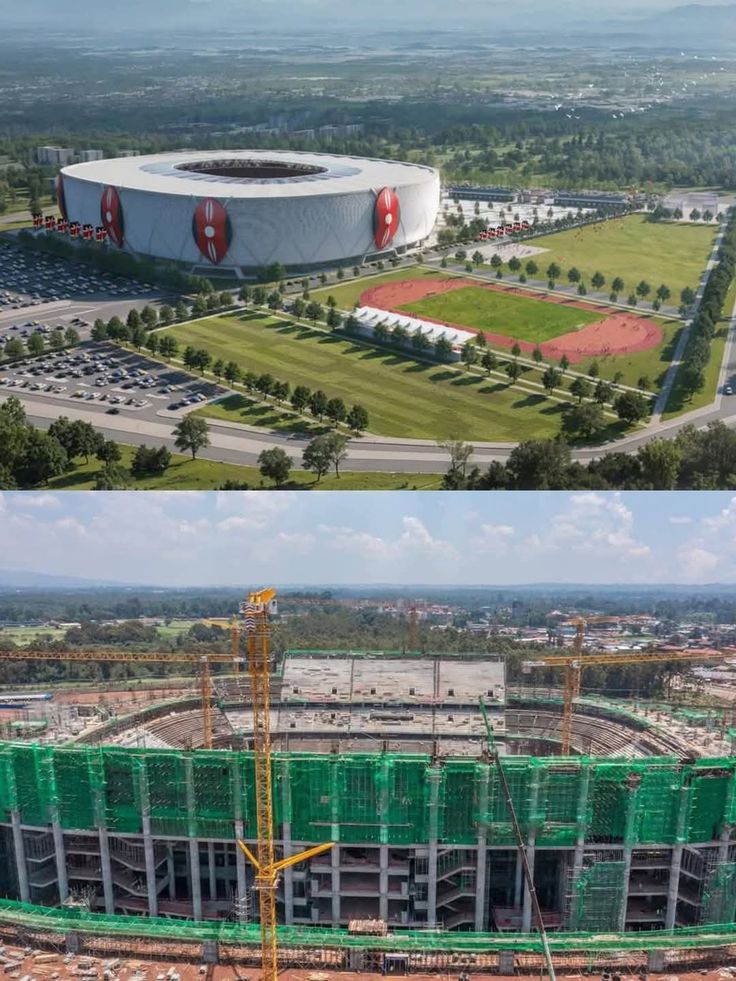
What happens to the stadiums?
Public investment in stadiums can be justified as infrastructure. But the questions that follow matter. Who will maintain the facilities? Who will market them and fill them with events? Who will make sure they do not become expensive monuments used only when the national team plays?
A stadium should not sleep for 350 days a year. Run well, it is an entertainment and business centre earning from ticketing, naming rights, hospitality, food and beverage, retail, concerts, conferences, parking, digital advertising and tours. The government can provide the facility, while private operators bring the expertise and capital to commercialise it. Public ownership does not require public-sector management of every commercial activity.
Stop selling sponsorship as charity
The most important cultural shift is in how football approaches companies. The old pitch is "give us money and put your logo on our jersey." A company does not invest millions because football needs money. It invests because football can deliver something in return: brand visibility, customer acquisition, community goodwill, digital engagement, content, hospitality or youth-development credentials.
The conversation should move from "Can you sponsor us?" to "What business objectives can we help you achieve?"
A telecoms company could work with a club on digital engagement, from a club app and fan competitions to exclusive player content. A bank could build a financial literacy programme for players and supporters. An insurer could offer player and fan cover. A technology firm could supply ticketing and fan-management systems. A university could partner on sports science, journalism and data analytics. That is not sponsorship. It is a commercial partnership.
It also has to be measurable. A club receiving KSh50 million should be able to show what the sponsor got: spectators reached, television audience, social impressions, engagement, merchandise sales, hospitality guests and community beneficiaries. Sponsors are increasingly weighing measurable audience engagement, and a 2026 assessment of Kenyan football's commercial challenges listed low attendance, inconsistent broadcasting, weak club identities and governance concerns as the main barriers. A club with 500,000 engaged followers has an asset. A club with 500,000 passive followers has a number.
Fans, content and broadcasting: the audience is the product
Football is not a 90-minute event. It is an entertainment ecosystem of rivalries, stories, personalities, music, fashion, betting, fantasy football, podcasts and community identity. The match is only its centre.
Fans as customers. A supporter should be able to spend money on a club without buying a match ticket. A membership costing KSh500 or KSh1,000 a year, with discounted tickets, merchandise offers, exclusive content and priority access, multiplied across thousands of supporters, produces predictable recurring revenue. Add jerseys, scarves, training kits and hospitality, and supporters become part of the club's financial model, without destroying the culture of fandom.
Clubs as media companies. Training sessions, player interviews, academy stories, derby history and behind-the-scenes footage are all products. Social accounts that only announce kick-off times waste them. Better content builds a larger audience, which raises sponsor value, which funds better football operations.
Broadcasting as a financial issue. A league that is hard to watch is hard to commercialise. Kenya should explore a mix of free-to-air, pay television, streaming, mobile platforms and YouTube highlights, with one objective: make Kenyan football easy to watch. CAF itself treats media rights, sponsorships and marketing assets as core revenue mechanisms for African competitions, and Kenya should learn from that.
Government as market-maker
This is not an argument for government withdrawal. It is an argument for changing what the government primarily finances, so that it enables the market rather than being the market. That means four things.
- Infrastructure. Build and maintain stadiums, training grounds and community pitches, and require that they be commercially managed.
- Clear rules for investors. The Draft National Sports Policy 2025 recognises that private-sector involvement remains insufficiently structured. It proposes a national sports investment strategy, stronger public-private partnerships and possible tax incentives for sponsorship and sports investment. That is the right direction. Investors need to know who owns rights, who controls sponsorship inventory, how contracts survive leadership changes and how conflicts of interest are handled.
- Performance-based public funding. Instead of simply allocating money, link support to audited financial statements, governance compliance, player welfare, youth and women's football, attendance, commercial revenue generated and community impact. The government stays a partner, but organisations gain a reason to become sustainable.
- Grassroots access. Ensure children have facilities and structured opportunities, the area where commercial returns take longest and public investment matters most.
Clubs must become investment-ready
Private capital will not fix football if clubs stay poorly governed. Businesses have legitimate concerns: transparency, predictable contracts, professional administration, protection from leadership disputes, and confidence that their money reaches the intended programmes.
A serious club should therefore have audited accounts, a commercial and media strategy, a sponsorship inventory, a fan database, a marketing department, clear governance and published annual targets. A company should be able to sit down with a club and know exactly what it is buying.
The same logic applies to academies. Private investors could fund them in exchange for agreed commercial rights, corporate partners could sponsor age groups, and international clubs could form development partnerships. When a pathway from grassroots to academy to professional club to international transfer to national team works, player development itself becomes an economic activity.
An AFCON private-sector mobilisation
AFCON 2027 should not be a government project with companies invited to buy advertising space. Kenya should convene an AFCON Private Sector Business Forum bringing together banks, telecoms, airlines, hotels, technology firms, media companies, retailers, logistics operators and tourism businesses, to identify what they can build around the tournament: fan experiences, tourism packages, merchandise, digital platforms, hospitality, cultural festivals, football documentaries and sports technology.
CAF has already invited African and global suppliers to compete for tender opportunities connected to AFCON 2027. Kenyan businesses should be positioned to win them. AFCON should not simply happen in Kenya. It should create businesses for Kenya.
The question that decides the legacy
A successful tournament lasts a few weeks. A successful sports industry lasts decades. So the question Kenya should be asking is not only whether the stadiums will be ready, but whether the football economy will be. Will clubs have stronger commercial departments? Will stadiums have permanent commercial uses? Will broadcasters have sustainable products? Will fans have more ways to spend on their clubs? Will the private sector see football as an investment rather than a donation?
The SportPesa deal proves long-term commercial investment is possible. The government's own policy discussions increasingly recognise the need for stronger private participation. The next step is to make such partnerships the rule rather than the exception.
The government should remain an important foundation. It should not be expected to be the foundation, walls, roof and electricity of the entire industry. The goal is a football economy standing on many pillars: government, private investment, broadcasting, fans, sponsorship, academies, technology and international markets, with government as one partner among many.
That is the transition Kenyan football urgently needs.


