Is the Outrage Necessary?
SportsIs the Outrage Necessary?
From Football Controversy to Economic Opportunity: What Kenya Can Learn from Rwanda’s Sports Tourism Strategy.
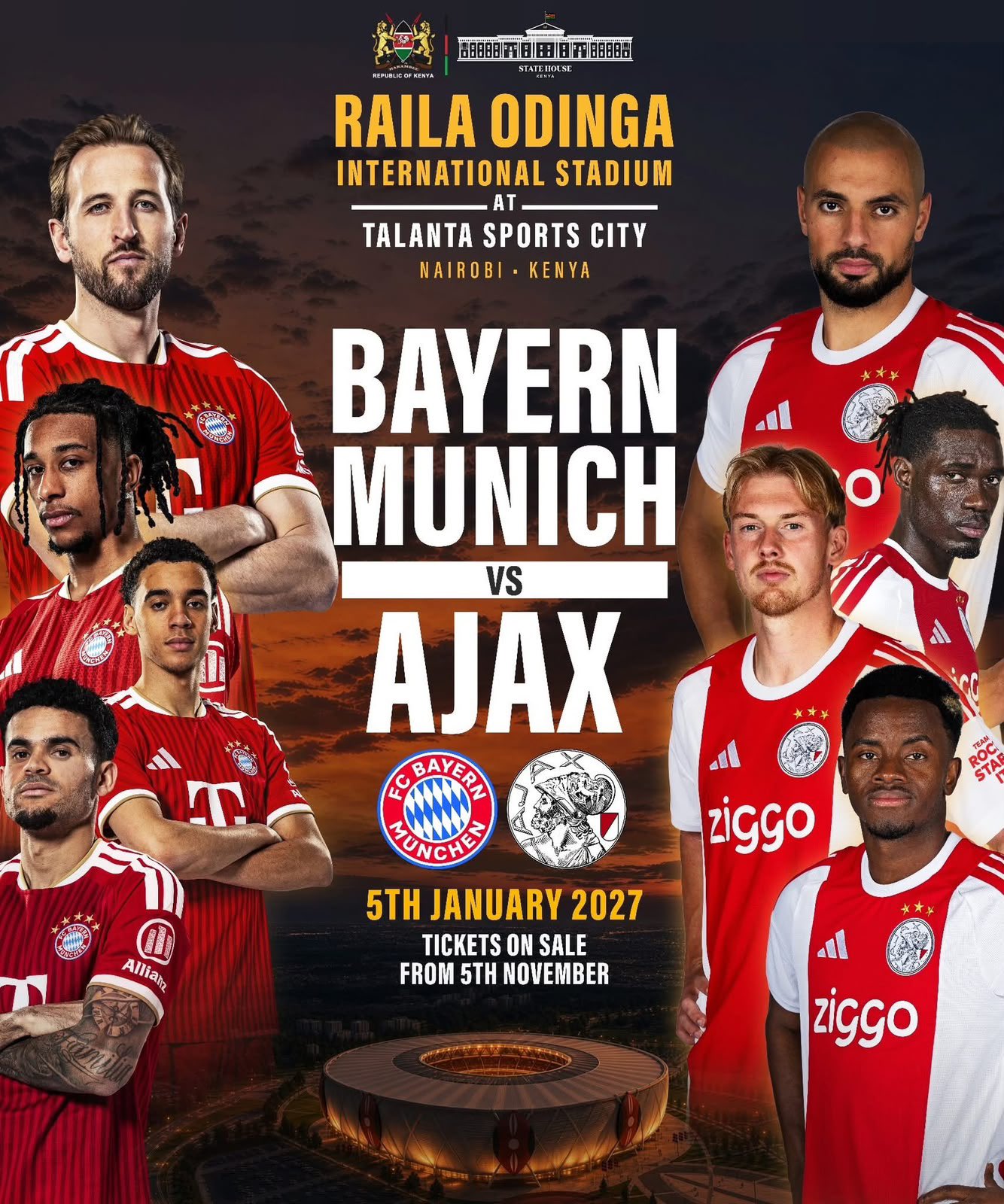
Kenya is preparing to welcome Bayern Munich and Ajax for the inauguration of its new national stadium. The announcement has generated excitement, criticism and questions about public expenditure. But perhaps we are asking the wrong question. Instead of debating whether foreign clubs deserve to open a Kenyan stadium, we should be asking what Kenya intends to gain from bringing them here.
The announcement that German football giants Bayern Munich and Dutch giants AFC Ajax will face each other at the Raila Odinga International Stadium on 5 January 2027 has triggered a familiar national debate. For some, it is a historic opportunity to put Kenya on the international sporting map. For others, it is an unnecessary extravagance, particularly when the stadium has been built using public resources and Kenyan football continues to struggle with financial and institutional challenges. The criticism is not entirely misplaced. Kenyans have every right to question public expenditure, demand accountability and ask what local football stands to gain from such an arrangement. However, I do not understand why the arrival of two internationally recognised football clubs must automatically be treated as an affront to Kenyan football.
We should be careful not to confuse national pride with economic opportunity. Welcoming international football clubs does not mean abandoning local football. It means understanding that football is more than ninety minutes on a pitch. It is an industry, a tourism product, a marketing platform and an instrument of economic development. And that is where Kenya's conversation should begin.
The spectacle is not the problem. The strategy is.
Bayern Munich and Ajax are not ordinary football clubs. They command international audiences, have established commercial networks and carry decades of sporting history. Their presence in Nairobi will attract attention from international media, football supporters, sponsors and potential commercial partners. According to Bayern Munich's announcement, the fixture is intended to strengthen the club's connection with its African supporters while expanding its international profile.
Kenya should be looking at this through a similar commercial lens. Every international sporting event presents an opportunity to market a country. Visitors require accommodation, transport, hospitality, entertainment and other services. Broadcasters generate international exposure, sponsors seek visibility and businesses gain opportunities to engage new customers. The question, therefore, is not simply how much it costs to bring these clubs to Nairobi. It is what economic value the country can generate from their presence.
If the match attracts international visitors, promotes Kenyan tourism, creates commercial partnerships and opens doors for local businesses, it can become more than an opening ceremony. But if the clubs arrive, play, collect their fees and leave without a deliberate national marketing and investment strategy, then we will have spent an opportunity on a spectacle. That is the distinction we must make.
Rwanda understood the business of football
Perhaps the most useful comparison for Kenya is Rwanda. Over the past few years, Rwanda has deliberately positioned football as an instrument of international marketing, tourism promotion and investment attraction. Through its Visit Rwanda initiative, the country has entered into high-profile partnerships with some of the world's most recognisable sporting institutions, including Paris Saint-Germain (PSG), Arsenal and Atlético de Madrid.
These partnerships are not simply about having a national tourism logo displayed on a football jersey. They are part of a wider strategy to introduce Rwanda to international audiences, showcase its tourism attractions, promote its products and create opportunities for business partnerships. Consider the PSG partnership. In April 2025, Visit Rwanda and PSG renewed their partnership through 2028. The collaboration includes international brand visibility, promotional activities, cultural exchanges and opportunities to showcase Rwandan products.
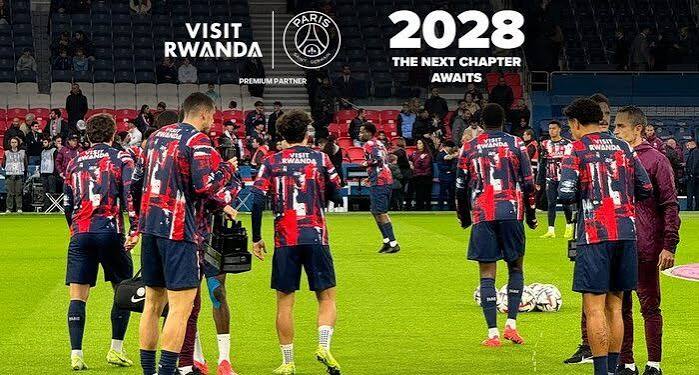
More importantly, the partnership has a domestic development component. The PSG Academy in Huye has trained more than 400 young Rwandans, providing access to professional football coaching, education and mentorship. This is an important distinction. Rwanda is not simply purchasing visibility. It is attempting to connect international sporting recognition with tourism, national branding, youth development and commercial opportunities.
The results of Rwanda's wider tourism and investment strategy are also worth examining. According to the Rwanda Development Board's 2025 annual report, tourism revenues reached $685 million, while registered investments amounted to $2.62 billion across 799 projects. The report also identifies international sporting partnerships as part of the country's broader visibility and investment-promotion strategy. These figures should not be attributed to football sponsorships alone, but they demonstrate the economic ambition behind Rwanda's approach.
Kenya should be asking why we cannot develop a similar model. We have a strong sporting history in several disciplines, internationally recognised athletes, a vibrant creative industry, diverse tourism attractions and a football-loving population. What we have struggled to build is a coordinated strategy that brings these assets together.
Kenya's football paradox
In my earlier article, Kenya's Football Paradox: A Nation That Loves the Game but Still Cannot Build a Football Business, I explored a fundamental contradiction within our sporting culture. Kenya is a country that loves football. We fill local entertainment spaces to watch European football, purchase club jerseys, debate international transfers and organise our weekends around matches played thousands of kilometres away. Yet our domestic football industry continues to struggle with commercial sustainability.
Our clubs face financial difficulties. Football academies operate with limited resources. Local players often lack adequate development structures, while sponsorship and broadcasting opportunities remain insufficient to support a competitive domestic game. We have cultivated consumers of international football without adequately building a sustainable business around our own football.
The Bayern Munich and Ajax fixture presents an opportunity to confront that contradiction. There is nothing inherently wrong with inviting international clubs to Kenya. In fact, international exposure can help develop the domestic game if the right structures are in place. The concern should be whether the event creates opportunities for Kenyan football or simply reinforces our position as spectators of an industry built elsewhere.
If Bayern Munich and Ajax can attract international attention to Nairobi, why should that attention not also benefit Gor Mahia, AFC Leopards, Tusker FC, Kenya Police FC and other local clubs? Why should young Kenyan footballers not have opportunities to train with international academies? Why should Kenyan sports businesses, broadcasters, travel companies and hospitality establishments not benefit from the commercial activity surrounding the event? These are the questions worth asking.
Public money demands public accountability
However, enthusiasm must not become an excuse for avoiding accountability. The Raila Odinga International Stadium is a major public infrastructure investment. Kenyans are entitled to know how much the opening fixture will cost, who is financing it, what contractual obligations have been entered into and what financial returns are expected.
Reports have placed the cost of bringing the two European clubs at approximately KSh1 billion. That figure requires clear official confirmation, including a breakdown of the expenditure and the respective financial obligations of the organisers. Public resources must be accounted for. If taxpayers are financing the event, the government should publish a transparent budget and explain the expected economic benefits. If private sponsors are contributing, their commitments should also be made public.
There is also a legitimate argument about the role of Kenyan clubs in the stadium's opening. Gor Mahia and AFC Leopards have enormous domestic followings. Harambee Stars represent the country internationally. Their involvement in the inauguration would have carried considerable symbolic value. But this does not have to be an either-or decision.
Kenya can host Bayern Munich and Ajax while creating a separate platform to celebrate domestic football. It can invite international clubs while investing in local academies. It can promote international sporting events without sidelining local talent. The mistake would be to turn this debate into a competition between foreign football and Kenyan football. We need both.
Turning a football match into an economic opportunity
The government should approach the January fixture as the beginning of a broader sports tourism and investment strategy. First, Kenya needs a coordinated international marketing campaign. The match should be promoted beyond the traditional sports audience. Our tourism attractions, hospitality industry, cultural experiences and investment opportunities should feature prominently in the campaign. A football supporter travelling from Europe to watch Bayern Munich should also have an opportunity to discover the Maasai Mara, the Kenyan coast, Nairobi National Park and other destinations.
This requires cooperation between the Ministry of Tourism, the Ministry of Sports, the Kenya Tourism Board, the Kenya Investment Authority, private tourism operators and the event organisers. Local businesses must also be incorporated into the commercial arrangements. Kenyan hotels, transport companies, restaurants, tour operators, creative agencies and merchandise businesses should have opportunities to participate. The government should encourage partnerships between international sporting brands and Kenyan enterprises.
We must also establish a meaningful football development programme. The event could provide a platform for youth coaching clinics, academy partnerships, talent identification programmes and exchanges between Kenyan coaches and international football institutions. A structured programme involving Bayern Munich, Ajax, the Football Kenya Federation and local academies would create benefits extending beyond the match itself.
Kenya should also use the event to attract investment into its domestic football industry. We need investors willing to support club development, football academies, sports technology, broadcasting, sports medicine, stadium management and commercial football infrastructure. A modern stadium is important, but infrastructure alone does not create a sporting economy. It requires professional management, commercial partnerships, consistent events and institutions capable of generating revenue.
Finally, Kenya must develop a long-term sports tourism calendar. The January match should not be an isolated event. Kenya is preparing to co-host AFCON 2027 with Uganda and Tanzania. That creates an opportunity to position East Africa as a major destination for international sporting events. The experience gained from hosting the Bayern Munich and Ajax fixture should contribute to our preparations for AFCON, particularly in security, logistics, ticketing, hospitality, broadcasting and stadium operations.
The bigger question is what happens after January 5
There is a danger that we will spend the coming weeks arguing about the suitability of foreign clubs, the cost of the event and the politics surrounding the stadium, only to forget the bigger opportunity once the final whistle is blown. That would be unfortunate.
The stadium must become an economic asset, not simply a monument to public expenditure. It should host international fixtures, domestic league matches, continental competitions, concerts and other major events. Its management should be guided by commercial sustainability, transparency and accessibility.
Kenya should also study how countries such as Rwanda have incorporated sport into their national branding strategies. We do not have to copy Rwanda's model entirely. We can develop something that reflects our own strengths, institutions and economic priorities. Our athletics heritage, football culture, tourism industry, creative economy and geographical position give us a unique starting point. But none of these advantages will automatically translate into economic returns without deliberate planning.
Is the outrage necessary?
I believe Kenyans are right to demand accountability. They are right to question expenditure and insist that public investments benefit the people who finance them. But opposing the arrival of Bayern Munich and Ajax simply because they are foreign clubs misses the bigger picture. We should not be so preoccupied with who gets to play the opening match that we fail to recognise the opportunities surrounding it.
The real scandal would be bringing two internationally recognised football institutions to Nairobi, attracting global attention and then doing absolutely nothing meaningful with that exposure.
Let Bayern Munich and Ajax come. Let the world watch Nairobi. Let international football supporters discover Kenya. But let us also ensure that Kenyan footballers, clubs, businesses and communities benefit from the occasion.
We cannot continue celebrating our love for football while refusing to build a business around it. The question is not whether Bayern Munich and Ajax should play in Kenya. The question is whether Kenya is prepared to turn their visit into something bigger than a football match.


